What is Business Analytics ?
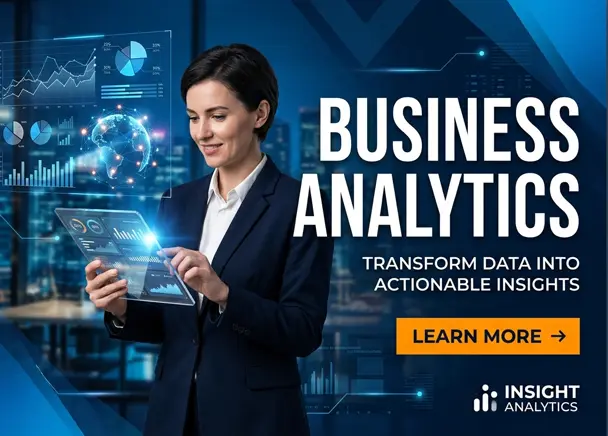
In a world where data plays a pivotal role, companies are literally drowning in information. From customer transactions and website clicks to operational logs and market trends, the volume of data generated is overwhelming. However, raw data alone is just noise. The real magic happens when we can use this data to extract valuable insights, make more informed decisions, and ultimately improve business performance. This is where business intelligence comes in.
At its core, business analytics (Business Analytics, BA) is the systematic computational analysis of data and statistical models to generate valuable insights and make better business decisions. It is the process of transforming raw data into useful analytical information that can help with strategic planning, operational optimization, enhancing customer experience, and identifying new opportunities. Imagine it as a bridge between the vast ocean of data and the shore where informed decisions are made.
Let's explore the components of business analytics:
Despite the brevity of the definition, business intelligence is a multifaceted practice that can be divided into several key areas:
Data collection and preparation. This is the fundamental stage. It involves collecting relevant data from various sources, cleaning it of errors and inconsistencies, and transforming it into a format that is easy to analyze. This may include integrating data from different systems, correcting inaccuracies, and standardizing formats.
Data analysis. This is where the real "intelligence" begins. This involves the use of various statistical methods, algorithms, and modeling approaches to identify patterns, trends, and relationships hidden in the data. This can range from simple descriptive statistics to complex predictive modeling.
Data visualization: Once the information has been obtained, it must be effectively communicated. Data visualization uses charts, graphs, dashboards, and other visual tools to present complex information in a clear and digestible manner. This helps stakeholders quickly grasp key insights and make informed decisions.
Reporting and Interpretation: BA involves generating reports that summarize the results of data analysis. More importantly, it also includes interpreting these results. What do the identified patterns mean for the business? What are the implications of the trends? The human element in analysis is vital for transforming data into actionable strategies.
"Why" Business Analytics: Key Goals and Benefits
The primary goal of business analytics is to enable organizations to:
Understand past outcomes (descriptive analytics): What happened? This involves summarizing historical data to understand key metrics, identify trends, and assess the overall health of the business. Examples include sales reports, website traffic analysis, and customer demographics.
Diagnosing the causes of past outcomes (diagnostic analytics): Why did this happen? This approach allows for a deeper understanding of the underlying reasons for certain outcomes. For example, why did sales decline in a specific region or why did customer churn increase?
Predicting future outcomes (predictive analytics): What might happen? For this purpose, historical data and statistical models are used to predict future events and trends. For example, you can predict customer behavior, predict demand, or identify potential risks.
Prescriptive Analytics: What should we do about it? This is the most advanced form of business intelligence that not only predicts possible scenarios, but also recommends the best course of action to achieve the desired result. This can be the optimization of marketing campaigns, stock recommendations, or pricing strategies.
The benefits of implementing a robust business intelligence strategy are significant:
Improved decision-making process: Moving from intuition-based decisions to data-driven decisions allows for more informed and effective decision-making.
Increased efficiency and productivity: Identifying bottlenecks and optimizing processes can significantly improve operational efficiency.
Deeper understanding of customer needs: By analyzing customer data, companies can personalize customer experiences, anticipate customer needs, and enhance customer satisfaction.
Identifying new opportunities: Detecting hidden trends and market gaps can lead to the development of new products, services, or market segments.
Reducing costs and risks: Identifying potential problems and inefficient processes in advance can lead to cost savings and reduced risks.
Competitive advantage: Organizations that effectively use business analytics can outperform their competitors by better understanding market dynamics and customer behavior.
Who uses business analytics?
Business analytics is not limited to a single department. This discipline can be useful in various fields and industries:
Marketing: analyzing campaign performance, segmenting customers, and predicting consumer behavior.
Sales: forecasting sales, identifying potential customers, and optimizing sales strategies.
Finance: budgeting, forecasting financial performance, and identifying financial risks.
Operations: optimizing supply chains, managing inventory, and improving production efficiency.
Human Resources: analyzing employee performance, predicting turnover rates, and optimizing talent acquisition.
Healthcare: Improving patient care, predicting disease outbreaks, and optimizing resource allocation.
Retail: Understanding customer purchasing habits, optimizing store layouts, and managing inventory.
The Future of Business Analytics
As technology advances, business analytics becomes increasingly complex. The development of artificial intelligence (AI) and machine learning (ML) further expands the capabilities of undergraduate programs, enabling more sophisticated predictions, automated decision-making, and deeper insights. The demand for skilled business analysts is expected to grow as more organizations recognize the strategic importance of data-driven decision-making.
In summary, business analytics is no longer a niche discipline but a fundamental requirement for success in today's business landscape. By harnessing the power of data, organizations can gain access to vast amounts of knowledge, make more informed decisions, and ultimately pave the way for sustainable growth and prosperity.