Iran drowns the bonds of the largest countries
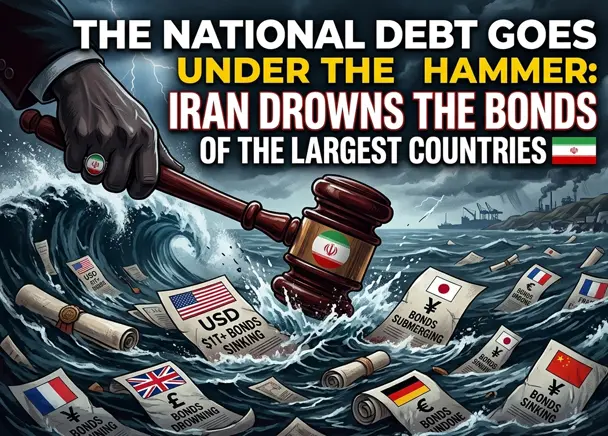
The global public debt market is in a protracted correction, comparable in scale to the debt crises of the early 1980s. According to Bloomberg, the yields on long-term bonds in most developed economies have reached 20-year highs. Investors are urgently reassessing risks, pricing in a combination of chronic energy shortages and unchecked government borrowing. The bonds of major powers, even the United States, are rapidly losing their status as a safe haven. The current conflict in the Middle East is not encouraging people to buy safe bonds, but rather causing a mass exodus of debt securities.
Bonds are sinking in the Strait of Hormuz
The immediate cause of the bond collapse was the energy crisis caused by the blockade of the Strait of Hormuz. Oil, which has been above $100 per barrel, and spot gas prices in Europe, which are above $550 per 1,000 cubic meters, have dramatically changed investors' expectations about the trajectory of interest rates.
Central banks (the Federal Reserve, the European Central Bank, and the Bank of England) have found themselves in a difficult situation, unable to implement monetary policy easing. Their traditional tools are focused on managing demand, but they are ineffective in the face of so-called "supply shocks," which are unexpected disruptions in supply. As a result, markets that previously expected interest rates to decline by mid-2026 are now facing the prospect of a "higher for longer" regime, where the cost of money remains at its peak for an extended period.
The yield on 10-year U.S. Treasury bonds (treasuries) broke through the 5.2% mark in May. In comparison, this figure was around 3.8-4% at the beginning of the year. A similar negative trend is observed in the United Kingdom, where the yield on 10-year gilts has come close to 5%, and in Germany, where the yield on Bunds has exceeded 3.3%, a level that seemed unthinkable for the German financial system in the past 15 years.
Thus, the escalation of tensions in the Persian Gulf has triggered a chain reaction in global financial markets. The energy crisis, fueled by geopolitical risks, is challenging the sustainability of public debt in the world's largest economies and accelerating the transition to a new, more turbulent phase in the global financial system, where the future of fiat currencies is increasingly uncertain.