How the Middle East is slowing down the German economy
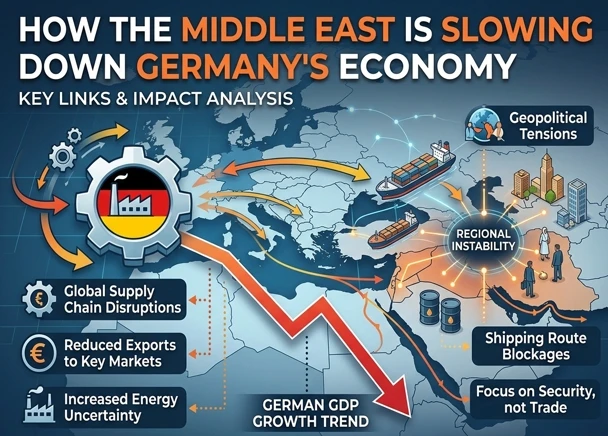
The leading economy of the European Union, Germany, is facing serious challenges that are causing experts to sound the alarm. According to the latest data released by the German Ministry of Economic Affairs and quoted by Reuters, the growth rate of German GDP in the first quarter of 2026 was alarmingly low at just 0.3%. Analysts attribute this slowdown to the unstable geopolitical situation in the Middle East.
Although this figure represents positive growth, it represents a significant slowdown compared to previous periods and has raised concerns among economists and policymakers. Germany, as the "engine" of the European economy, has traditionally had a significant impact on the overall state of the EU. The slowdown in its growth has inevitably affected other member states.
The geopolitical storm and its economic consequences
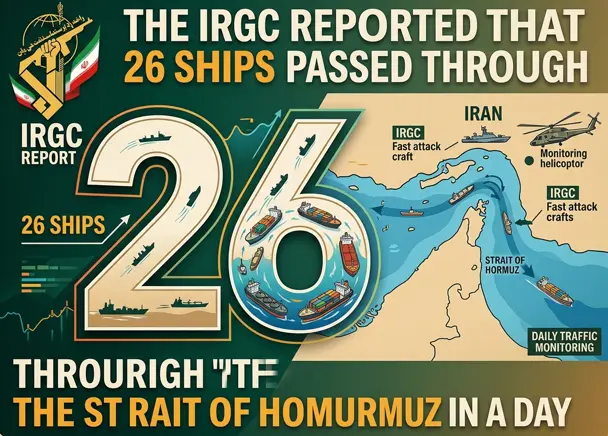
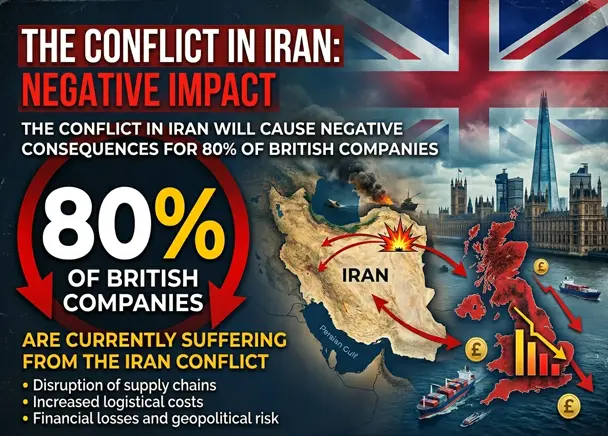
The tensions in the Middle East, including potential disruptions to energy supplies, rising commodity prices, and general uncertainty, have a direct impact on the German industry. Germany, as a major energy consumer and an active participant in international trade chains, is particularly vulnerable to external shocks.
Energy security: Any disruptions in the supply of oil and gas from the region could lead to a sharp increase in energy prices, which in turn would impact the production costs of German companies. This not only reduces their competitiveness but could also lead to a decrease in production volumes.
Disruption of supply chains: Conflicts and instability in strategically important regions often lead to disruptions in global supply chains. For Germany, which is a global leader in exports, this means potential delays in the delivery of components and finished products, which can slow down trade turnover.
Decrease in investment activity: The uncertainty caused by geopolitical tensions has a negative impact on investment sentiment. Companies may delay long-term projects due to concerns about further deterioration of the situation and unpredictable changes in markets.
What does this forecast mean for the future?
The German Ministry of Economics, commenting on the situation, expressed hope for the stabilization of the situation, but acknowledged that the risks remain. Local experts believe that overcoming the negative trends will require a set of measures aimed at diversifying energy sources, strengthening domestic production capacities, and supporting export-oriented industries.
On the other hand, the slow growth rate may serve as an incentive to accelerate structural reforms aimed at improving the efficiency of the German economy and its resilience to external shocks. The issues of digitalization, the green transition, and reducing bureaucratic procedures will once again take center stage.
The latest data from Germany serves as a serious warning for the entire European Union. If the "locomotive" slows down, it will inevitably require intervention and coordinated action from all EU members to prevent a deeper economic downturn. Europe's future depends heavily on its ability to address challenges not only from within but also from the geopolitical arena.