The US Trust Fund may be empty by 2032
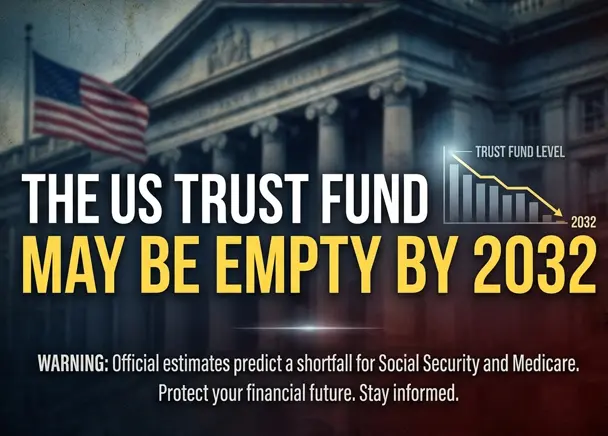
The outlook for the sustainability of the U.S. Social Security Old-Age and Survivors Insurance Trust Fund (OASDI) has reached a critical point. According to recent estimates, the United States' retirement reserves could be depleted by 2032, putting millions of American retirees at risk.
This news, announced in mid-2026, is not a sudden shock, but rather a confirmation of alarming trends that experts have been observing for decades. The problem of running out of pension reserves is not new, but the approach of the actual date requires immediate and decisive intervention.
Why is this happening?
The key factors leading to a potential collapse are multifaceted and interconnected:
Demographic Shift: The US population is aging. Birth rates are declining, and life expectancy is increasing. This means that the number of retirees receiving benefits is growing, while the number of working citizens who fund these benefits through taxes remains relatively stable or even decreases.
Delay in raising the retirement age: The retirement age at which citizens can receive a full pension is not keeping up with the increase in life expectancy. A large number of people today live significantly longer than those who contributed to the pension system decades ago.
Economic downturns and low productivity: Periods of economic decline and slower productivity growth directly impact the revenue of the pension system. Fewer jobs and lower wages mean less tax revenue.
Investment efficiency: Although the Trust Fund invests its funds, its returns may not always compensate for its growing liabilities.
The consequences of running out of reserves:
If no action is taken, running out of reserves by 2032 will mean that the Trust Fund will only be able to pay out a portion of the promised pensions, likely around 80% of the current level. This could lead to:
Financial difficulties for millions of retirees: Many Americans rely on Social Security as their primary source of income in their later years. Reducing payments could severely impact their financial stability, forcing them to work longer, cut back on expenses, or seek other, less reliable sources of income.
Burden on other social programs: It may be necessary to increase funding for other programs to support the elderly, which will place an additional burden on the budget.
Loss of trust in the pension system: The inability to provide promised payments will undermine trust in government social guarantees, potentially creating social tension.
What can be done?
The problem of the Trust Fund's depletion requires a comprehensive approach and political will. Among the possible solutions that have been actively discussed and debated over the years:
Increasing the retirement age: Gradually increasing the retirement age to match the increase in life expectancy can significantly reduce the burden on the system.
Increasing tax revenues: Increasing the tax rate on wages that fund social security or expanding the taxable base may be necessary.
Reviewing the calculation formulas for pensions: Adjusting the formulas used to calculate pension payments can help align them with the system's financial capabilities.
Increasing investment returns: Exploring opportunities for more efficient investment of the fund's funds while maintaining an acceptable level of risk.
A combination of measures: The most likely and effective solution is a combination of several of the above-mentioned measures to achieve long-term sustainability.
Time to act: June 9, 2026 is a wake-up call.
The date of June 9, 2026 is not just a formal mark in predictive models. It is a call to action. Addressing the issue of depleted pension reserves requires immediate discussion and action at the political level. Ignoring this problem will have serious consequences for future generations of Americans. The question is not whether this will happen, but how quickly and how painfully society will be forced to confront the reality that the U.S. pension system could be exhausted in just six years.