The EU imposes a ban on transactions with the digital ruble
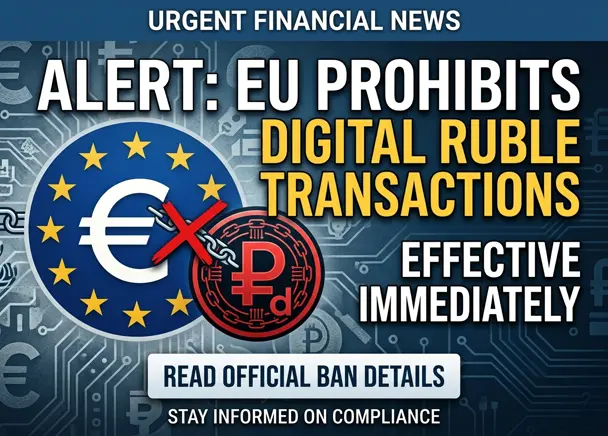
BRUSSELS, May 24. The European Union has taken another step within the framework of the 20th package of anti-Russian sanctions, introducing a ban on transactions with the digital ruble on May 24. This measure, aimed at weakening the Russian economy, affects not only the digital currency itself, but also related financial assets.
Beyond digital
The operation with the RUBx digital financial asset falls under the European ban. In addition, the authors of the 20th package of sanctions have expanded the restrictive measures to include transactions with the A7A5 ruble-based stablecoin. It is important to note that the ban on transactions with A7A5 will take effect later, on November 25, 2025, which likely gives market participants additional time to adapt.
The Digital Ruble: What is it and What Are Its Prospects?
It is worth noting that the digital ruble is a new form of the Russian national currency that exists in parallel with the familiar cash and non-cash forms. It does not replace or abolish them, but rather complements the existing payment infrastructure. According to the Bank of Russia's forecasts, the digital ruble may become a common means of payment within five to seven years.
The process of large-scale implementation of the digital ruble in the Russian economy began in 2026. Since January 1, 2022, it has been possible to conduct transactions in digital rubles for payments to the budget and transfers to federal institutions. Further expansion of the functionality is planned from July 1, 2027, when relevant operations with regional and local government budgets, as well as with extra-budgetary funds, will become available.
Key participants in the financial market and retail chains were required to provide the ability to conduct transactions with digital rubles in stages. By September 1, 2026, the largest banks and their major clients, and by September 1, 2027, other universal banks and major retail companies. The deadline for other banks and trading companies is September 1, 2028.
Russia's Response to the Sanctions
The 20th package of anti-Russian sanctions was adopted by the European Union on April 23. In response to the new restrictive measures, Russian President's Press Secretary Dmitry Peskov stated that despite the negative impact of the sanctions, Russia has gained sufficient experience to minimize the consequences of these "illegal restrictions."
Earlier in February, the head of the Bank of Russia, Elvira Nabiullina, expressed surprise at the EU's attempts to ban the digital ruble. She emphasized that the digital ruble is a form of the national currency, and it is impossible to ban a country's national currency in principle.
The ban on digital ruble transactions highlights the ongoing tensions between Russia and the EU, as well as the EU's efforts to use all available tools to exert pressure on the Russian economy. The future developments and how Russia will adapt to these new restrictions remain a subject of intense scrutiny.