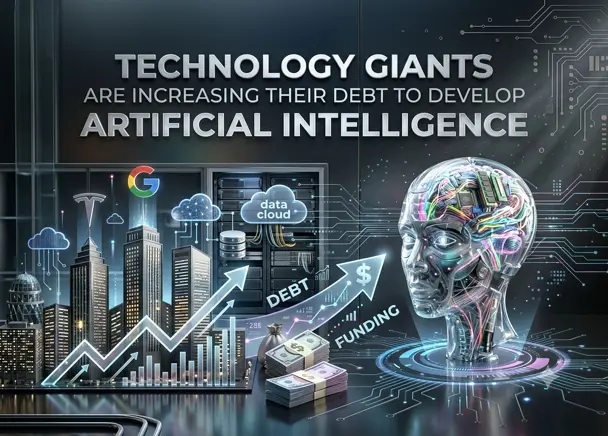
Technology giants are increasing their debt to develop artificial intelligence
June 20, 2026. The global technology sector is at the epicenter of an unprecedented financial cycle. Leading IT corporations, including the leaders of the Big Five, released reports this week showing a sharp increase in debt load. The goal is ambitious but risky: to raise billions of dollars to finance the enormous costs of AI infrastructure.
The era of giant investments
Analysts estimate that the total amount of new debt issued by the largest technology companies since the beginning of 2026 has already surpassed the total amount of debt issued in 2024. Most of the funds raised are not used to buy back shares or pay dividends, as was the case in previous decades, but to build hyperscale data centers (data centers), purchase the latest graphics processors and develop power grids.
"We are witnessing the transformation of companies' balance sheets in an attempt to win the AI race," says Elena Markova, chief market strategist at Global Tech Insights financial conglomerate. "Investors are no longer asking for restraint. Today, they require scale, even if it means running into debt at current interest rates."
Why are companies taking risks?
The main driver of the debt boom has been the market's demand for the so-called "AI agent 3.0," a next-generation model capable of autonomous decision-making. Training such systems requires computational power that can cost tens of billions of dollars per cluster.
Here are the key factors driving the giants to borrow money:
Energy Shortage: The development of AI requires a massive amount of electricity. Companies are forced to invest in building their own energy facilities, including modular nuclear reactors, which requires long-term external financing.
Global competition: No company can afford to pause, fearing the loss of market share and intellectual advantage over competitors from Asia and other regions.
Equipment upgrades: The short chip life cycle forces companies to upgrade their server hardware every 18-24 months, turning capital expenditures (CapEx) into a constant expense.
Investor concerns
Despite the optimism of long-term investors, the debt strategy of the giants is causing concern among regulators and rating agencies. Experts warn that if AI monetization expectations are not met in the next two years, companies will face serious challenges in servicing their loans.
"As long as the revenue stream from AI services continues to grow, the market tends to overlook the debt figures," says economist Mark Stevens. "However, we are entering a period of increased volatility. If the demand for corporate AI solutions slows down, the debt leverage that helps companies grow today will become their main threat."
Looking to the future
The market is waiting for the third-quarter 2026 earnings reports. Many analysts believe that these reports will determine whether the current debt strategy is a triumph of technological progress or a financial bubble that threatens the stability of the entire stock market.
At the moment, the IT giants remain steadfast, arguing that not investing today will mean an inevitable loss of market share tomorrow. The race continues, and the cost of entering the future is becoming increasingly high.